BAD SANTA – THE MAKING OF A CULT CLASSIC WITH DIRECTOR TERRY ZWIGOFF

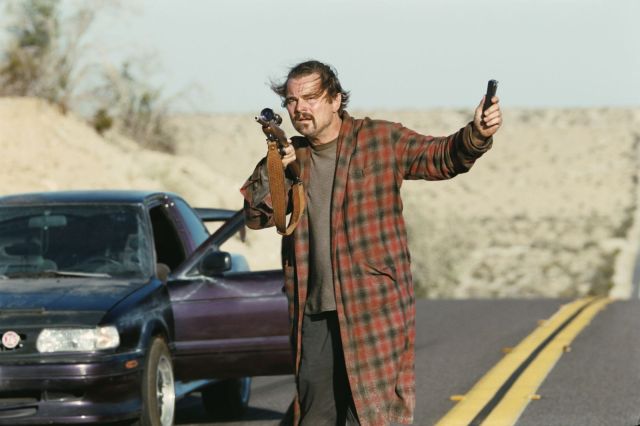
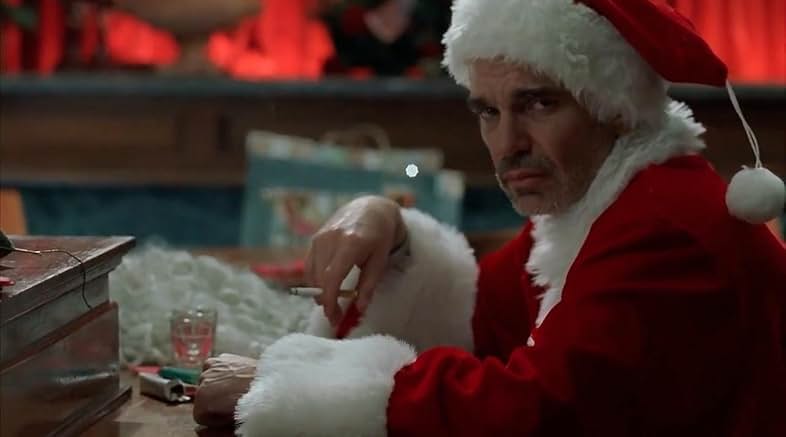
Billy Bob Thornton in Bad Santa (2003) © 2003 Dimension Films. 

Article by Marcus Siu

It’s been twenty two years since the release of Bad Santa. While the R-rated holiday film didn’t quite make the rotation of TCM’s Christmas classics such as, “It’s a Wonderful Life”, “Miracle on 34th Street”, “A Christmas Story”, “Home Alone”, and “Elf”, it certainly has been a cult favorite among fans everywhere who appreciate raunchy dark comedies showcasing deeply flawed individuals trying to find human connection in a society filled with Holiday cynicism.

When the script’s final draft was sent to Universal Pictures, the studio rejected it because “It was the foulest, disgusting, misogynistic, anti-Christmas, anti-children thing we could imagine. Some people found it mean spirited, and were probably turned off by all the sex and profanity throughout the movie and left the theater before it was over.

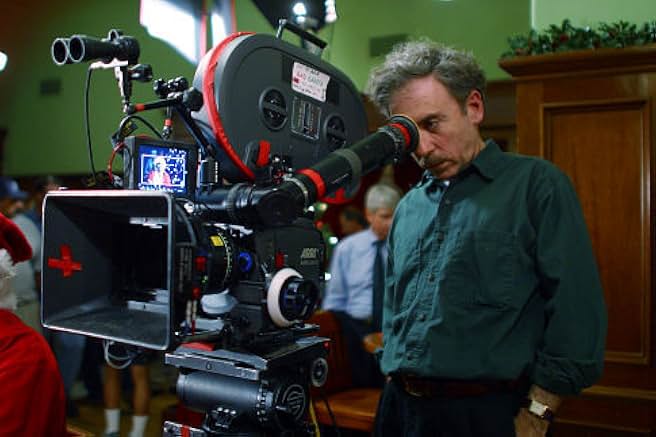
Director Terry Zwigoff was fresh on the critical success of “Crumb”, the Sundance winner of the 1997 Grand Jury prize for Best Documentary featuring an intimate portrait of controversial cartoonist Robert Crumb and his traumatized family, (also produced by David Lynch), and the Oscar nominated coming of age movie, “Ghost World”, starring Steve Buscemi and Scarlett Johansson and Thora Birch which Zwigoff and Daniel Clowes were nominated for Best Adapted Screenplay.

With a reputation about telling stories of eccentric characters, Zwigoff’s agent has always been “pestering” him to get projects going and got hold of the script from “Bad Santa”. “My agent sent me this script, but she sent it with a note saying, you’re going to love this, but you’re never going to get it made. Nobody’s going to make this film”, Zwigoff recalled.

“But I said this dialogue is just so incredible. I mean, I just read three lines of that script, and I thought, I just have to make this film.” The three lines were “Thank the **** Christ”, “Sweet juice for Jesus”, and “This ain’t no Chinese menu, jagoff!”.

The Coen Brothers got hold of the script and Zwigoff thought they were going to invite him to lunch just to chew him out. Surprisingly, they loved the script and were enthusiastic in producing the film. They brought their ideas into the script.

“They pulled out this crumpled up newspaper article about a guy who was a drunken Santa”, Zwigoff recalled “The idea is this guy’s drunk and he drinks beer and stuff and he says, Santa… and they said, that’s it.”

As months passed by, Zwigoff thought the deal was dead and he was ready to move on to something else, but then he got a call from Bob and Harvey Weinstein. They just saw “Ghost World” and wanted to do a film with him. However, they did not realize that they had previously passed on the script of “Ghost World” that Zwigoff sent to them in the mail prior to when it got the green light.

FIVE GREAT ACTORS TO POSSIBLY PLAY BAD SANTA

Regardless of this omission, the Weinstein’s were all aboard and had mentioned five names to play Willie’s “Bad Santa” character, including A-listers Robert DeNiro, Jack Nicholson, and Sean Penn. Nicholson really wanted to play the role but had already signed on with “Something’s Gotta Give”. DeNiro had his own personal “shtick” comedy that didn’t quite match Zwigoff’s ideas, but also didn’t want to deal with Zwigoff’s producers. Penn bowed out when the Weinstein’s demanded that he audition for the role. Lastly, Bill Murray was also considered but didn’t return any of Zwigoff’s phone calls, which just left one actor named Billy Bob Thornton.

“So they sent him (Thornton) the script, and he wanted to talk to me and Weinstein, and he called us on a three-way call, and he said, “I’m in, I’ll do it. I love the script, I love Terry, but I’m not doing any profanity or anything sexual.” Zwigoff said, “I’m like, okay, we got a 22-minute film now.”

“So Weinstein said, forget it, and hung up on him and called me back and said, “this isn’t going to work, so we have to rethink this.” I said, “okay, so I’m dead in the water again” and then he had to change of heart and called back and said “He’d do it.”, Zwigoff added. “I don’t know what that was about. I don’t know, to this day.”

When casting for Sue, the bartender who has a fetish for Santa Claus, played by Lauren Graham, Zwigoff first had Mira Sorvino in mind for the role. However, when he mentioned her name to the Weinstein’s, they had hung up on him. Zwigoff took the hint.

THE DIRECTOR’S CUT

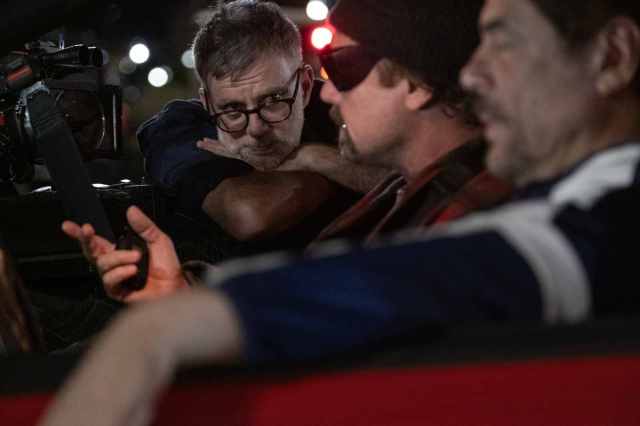
Director Terry Zwigoff – Bad Santa (2003) © 2003 Dimension Films. 

There were several cuts to Bad Santa. The Theatrical Cut, The Unrated Cut, and the Director’s cut. Most people have seen the theatrical cut and many did not like the director’s cut, even though it mirrored the character driven script. It was too dark for many people according to Zwigoff. The Unrated Cut just adds more R-rated raunchiness and doesn’t add much punch to the character development.

As far as the Director’s Cut, the best scene in the movie according to Zwigoff was written by his wife, Melissa Axelrod; which is known as the report card scene, where the kid is showing his report card.

“The kid is saying something like, “I know you’re not Santa Claus. I just thought maybe you’d want to give me a present because we’re friends.” Zwigoff said. “I thought it was a very touching scene and originally the scene was written where the Santa character just blows the kid off at the end.”

“When they saw that script, they said, I know you’re going with Billy Bob, but we just work with him and, I don’t know if it’s going to be that easy for him to naturally evidence self-hatred.” Zwigoff continued to push the method-actor Thornton to become the Walter Matthau character from the “Bad News Bears” and was always on his case to be more haggard…be more self-hating and more run down that Thornton had enough and didn’t come back to the set for two weeks.

“He was in a drunken, belligerent state through most of the filming, which may have helped his performance.” Zwigoff acknowledged how great he was, especially when after he read the voiceover on that letter at the end which he thought would take 400 takes. Thornton just did it in one take. “He just came in the trailer, here it is, get a microphone, read it once, it was perfect.”

However, Thornton was never very good at improvising with the delicate script that was actually written with James Gandolfini in mind on behalf of the Coen Brothers request. “We’d just throw it off, and me and the editor, Robert Hoffman, in that editing room, we would just sit there and try to retain the rhythm that they had created.” Zwigoff said.

Billy Bob Thornton, Bernie Mac, and Tony Cox in Bad Santa (2003) © 2003 Dimension Films. 

MICKEY ROONEY BEGGING FOR THE ROLE OF THE ELF

Zwigoff has an amusing story about Mickey Rooney auditioning for the role of Marcus, the Elf.

“So he comes in, and he hands me his resume, his headshot and I say, “Mickey, you’re like the biggest star in the world. You’re a legend”…I glance at his resume with 280 credits. He wants to read, and the Weinstein’s insist every reading gets videotaped and FedExed to them so they can approve or disapprove.”

“So he sets up the camera, he starts reading, and every time he gets to a profanity, he skips it and says, “blank”. So he says, “your mother blank and blank”. And I go, “Well, Mickey, you know, you got to say the profanity”. He says, “Well, there’s a lady in the room, the casting director”. She says, “I’m fine, Mickey, I’m the casting director”. Rooney responds, “I’ll do it on the day. I’ll do it on the day”. I’ll say, “Just do it today, because I got to make this leap.”

Zwigoff was thinking, “I got to get him hired and he was sort of in and out. He had these moments that were so brilliant and so great…and he’s begging me at this point.”

Rooney asks, “Do you think I have the job?… I really need this job… God, this is the greatest part I’ve ever read… Oh, you’ve got to help me, please…and he literally falls with me. He’s pulling on my pants… Jeez, how do I let this guy down easy, you know? …I just said, “Mickey, you’re just too tall. The guy’s 3 foot 6 in the script. I’ve got to have a guy 3 foot 6″ and so he was okay with that and he left and Tony Cox walked in and he was three foot six.”

Even Peter Dinklage auditioned for the role, but he wasn’t funny. Zwigoff acknowledged his greatness as an actor, but he just wasn’t funny to him. Many have auditioned that with far less talent than him that weren’t funny either.

“I think what it had to do with, I might be wrong, is rather mysterious and it’s rather subjective, but I really think was the fact that Tony Cox’s face naturally took on these sort of cartoonish expressions when he reacted…It was still truthful, but it was bigger. And Peter Dinklage’s face was always, sort of deadpan, but he’d say the lines, he’d get a little bit here and there.”

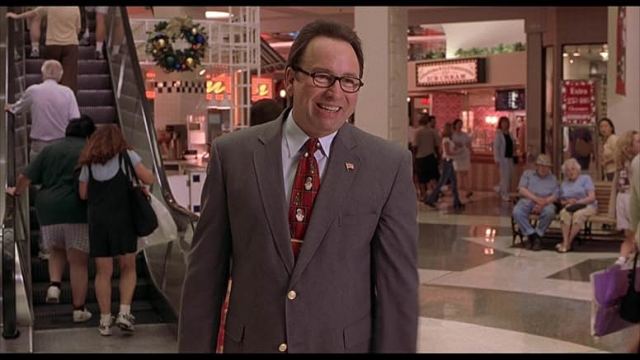
Bernie Mac was one of the busiest actors around during the time of the shoot. He had his own show and working on another movie so he needed Zwigoff to help him rehearse his lines. After a few mornings, they got together and he read his lines with no problem. Mac showed up and his first day of shooting with the scenes with John Ritter where he’s eating that orange, which wasn’t in the script at the time. It was basically just him across the desk from each other.

John Ritter in Bad Santa (2003) © 2003 Dimension Films. 

As soon as they were filming, “He just started delivering his lines like you couldn’t understand a thing he was saying. He was just speaking gibberish and sort of mumbling. And just went on for a while and John Ritter’s looking over at me like, what the, I don’t even know when to come in with my line. When is he done?”

“I finally took Bernie aside. I said, “Bernie, okay, what’s going on?” and he said, “Oh, I’m sorry. I’m just really nervous. You know, I just, I grew up like, worshiping John Ritter and it’s just like, I just can’t do the scene.” I said, “We love you, Bernie. He loves you” and then John came over to him and I don’t know what he said to him. He put him completely at ease.”

Zwigoff had an idea to sort of help him be a little less self-conscious.

“I thought, well, what if you peel this orange while the scene’s going on? You need a bite if you want, you know. So he starts eating this orange and then he did it in a sort of sloppy way at one point.” I said, “Play that up.” He said, “What?” I said, “This sloppiness, like, you’re eating in front of this guy who’s so prudish that he’s sort of, whenever he sees or hears anything off color, he sort of vomits a little bit inside his mouth. And it’ll really help his performance.”

Unfortunately, this would be the very last role for John Ritter.

Brett Kelly in Bad Santa (2003) © 2003 Dimension Films. 

THE KID FROM CANADA

“When it came to the kid, the Coen brothers also said, “You know, this is going to be really hard to find a kid who can remember all this dialogue and pull this off…in the script, he’s written like this sort of fat, weird kid. All I could think of was Joe Cobb from the Our Gang comedies from the 20s… a kid like that. That’s the instruction I gave the casting people and they went state by state to the entire country and couldn’t find a kid that looked like that. Finally, I went to Canada. They’re about to make me hire this other kid, who was a cute Disney kid and this kid from Canada, they sent me his headshot. and I said, if this, I just fell on the ground laughing. I said, if this kid can even walk and talk at the same time, he’s hired.”

“Brett Kelly came down with his mother. He was wearing exactly the outfit he wears throughout the entire film and I don’t know if his mother was a genius or if he actually dressed this way, but I said, “Whatever you do, stop by the wardrobe and have them copy this or, put this away, put this in moth balls for a few months and don’t wear it out because you’re going to wear that the whole film.”

Smart kid. I think he was in on the joke. That’s a sweet kid. Smart kid.

Posted in Entertainment | Tagged , , , , , , , , , , , , , , , , , , , , , , , , , , , , , , , , , , , , , , , , | Leave a comment

THIS YEAR’S SAN FRANCISCO SILENT FILM FESTIVAL COMES TO THE EAST BAY

Article by Marcus Siu

The San Francisco Silent Film Festival is considered to be the largest and most prestigious film festival outside of Pordenone, Italy, for its genre, running nearly 30 years. They continue to present silent films as they are meant to be seen; with beautiful preserved prints on a big screen with live musical accompaniment. Even a person who has never experienced silent film before will be mesmerized and hooked. 

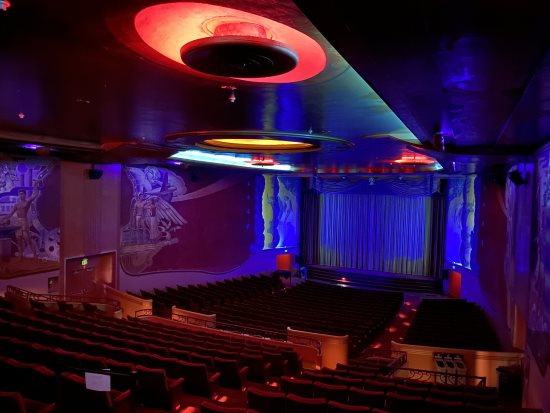
This year’s venue will have a new location, as the San Francisco Silent Film Festival moves from the Castro Theater to the Orinda Theater for this years festival.

For those visiting the Orinda Theater for the first time, it is worth noting that in 2023, the Time-Out website, based in France, listed the the theater as the 23rd most beautiful theater in the world. For San Franciscans, it maybe even easier to get to the new venue, as it is just a four minute walk (according to Googlemaps) from the Orinda BART station.

Charlie Chaplin in The Gold Rush celebrates its 100th anniversary during Opening Night

This year’s festival opens up Wednesday night with Charlie Chaplin’s “The Gold Rush”, which celebrates its 100th anniversary, with live musical accompaniment by the SF Conservatory of Music Orchestra with Timothy Brock conducting.

The festival concludes on Sunday with Buster Keaton’s 1925 “Go West”, which was also released the same year as “The Gold Rush” and is also celebrating its 100th anniversary with live musical accompaniment by the Mont Alto Motion Picture Orchestra.

Film restorers are critical to preserve the films for film festivals as well as for future generations. This is what Robert Harris and James Mockoski have been doing for decades.

If there was ever a Hall of Fame for film restorers, Robert Harris would be inaugurated in the first round. His credits include Abel Gance’s “Napoleon” (1927), “The Third Man” (1949), “Lawrence of Arabia” (1962), “Spartacus” (1960), “My Fair Lady” (1964), Vertigo” (1958), “Rear Window” (1954), “The Godfather” (1972), “The Godfather Part II” (1974).

James Mockoski, who has pretty much restored the entire Francis Ford Coppola American Zoetrope catalogue, including “The Godfather” (1972), “Apocalypse Now” (1979), “One From the Heart” (1981), “The Conversation” (1974), “Tucker: The Man and His Dream” (1988).

In addition, he also restored the Talking Heads “Stop Making Sense” for its 40th Anniversary just last year.

For this years festival, both Harris and Mockoski haves three films that need to be seen to be believed.

The New Klondike (1926) directed by Lewis Milestone

With the World Series fever over with, baseball will still be very much alive at the festival with the newly Harris-Mockoski restored “The New Klondike,” a 1926 baseball comedy, which was recently “lost”. It was directed by Lewis Milestone, who also received an Oscar four years later for directing “All Quiet on the Western Front” which also won Best Picture in 1930.

In addition to “The New Klondike,” include Cecil B. DeMille’s film, “The Affairs of Anatol” (1921) (starring Gloria Swanson) and “Beau Geste” (1926), the winner of Photoplay’s Medal of Honor, an Oscar precursor. Both films will have live musical accompaniment by Mont Alto Motion Picture Orchestra. Both were also restored by Harris and Mockoski.

The festival runs from Wednesday, November 12th thru Sunday, November 16th.

Restored to 1941 original, Orinda Theatre features work of famous theatre muralist Anthony Heinsbergen (1894-1981). Photo Derek Zemrak
Posted in Entertainment | Tagged , , , , , , , , , , , , , , | Leave a comment

THE THIRTEEN MOST HIGHLY ANTICIPATED MOVIE RELEASES THIS FALL SEASON

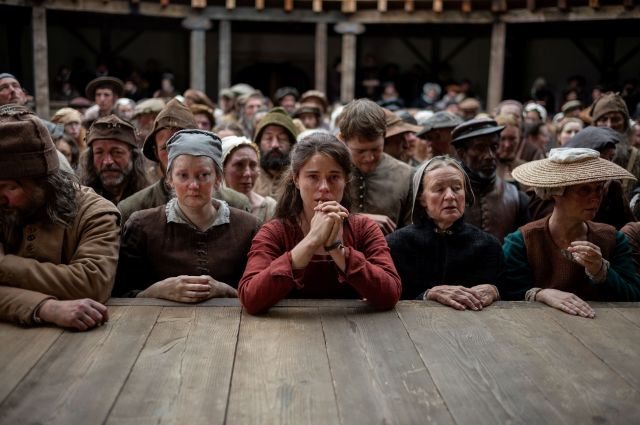
Jessie Buckley stars as Agnes and Paul Mescal as William Shakespeare in director Chloé Zhao’s HAMNET, a Focus Features release. Credit: Agata Grzybowska / © 2025 FOCUS FEATURES LLC

Article by Marcus Siu

It’s that time again when movie studios release their most prestigious titles by the end of the year to qualify their FYC films for Awards season. Streaming services, such as Netflix, Apple TV+ and Amazon, usually releases their films in theaters for at least two weeks and then streams them in two to three weeks later to their subscribers.

Look for these films to dominate the Awards season.

A HOUSE OF DYNAMITE (RELEASE DATE: OCTOBER 10, 2025 NETFLIX DATE OCTOBER 24, 2025)

Director: Kathryn Bigelow

AVATAR: FIRE AND ICE (RELEASE DATE: DECEMBER 19, 2025)

Director: James Cameron

BUGONIA (RELEASE DATE: OCTOBER 24, 2025)

Director: Yorgos Lanthimos

FRANKENSTEIN (RELEASE DATE: OCTOBER 17, 2025 NETFLIX DATE NOVEMBER 7, 2025)

Director: Guillermo del Toro

HAMNET (RELEASE DATE: DECEMBER 12, 2025)

Director: Chloé Zhao

IT WAS JUST AN ACCIDENT (RELEASE DATE: OCTOBER 15, 2025)

Director: Jafar Panahi

JAY KELLY (RELEASE DATE: NOVEMBER 14, 2025 NETFLIX DATE DECEMBER 5, 2025)

Director: Noah Baumbach

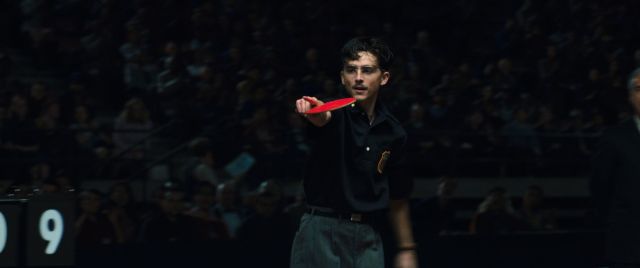
MARTY SUPREME (RELEASE DATE: DECEMBER 25, 2025)

Director: Josh Safdie

SENTIMENTAL VALUE (RELEASE DATE: NOVEMBER 7, 2025)

Director: Joachim Trier

THE SECRET AGENT (RELEASE DATE: NOVEMBER 26, 2025)

Director: Kleber Mendonça Filho

TRAIN DREAMS (RELEASE DATE: NOVEMBER 7, 2025 NETFLIX DATE NOVEMBER 21, 2025)

Director: Clint Bentley

WAKE UP DEAD MAN: A KNIVES OUT MYSTERY (RELEASE DATE: NOVEMBER 26, 2025 NETFLIX DATE DECEMBER 12, 2025)

Director: Rian Johnson

WICKED FOR GOOD (RELEASE DATE: NOVEMBER 21, 2025)

Director: Jon M. Chu

Posted in Entertainment | Tagged , , , , , , , , , , , , , | Leave a comment

JAMES CAMERON ON THE FUTURE OF 3D STORYTELLING AT META CONNECT 2025

Meta’s Andrew “Boz” Bosworth, the Chief Technology Officer (CTO) interviews filmmaker James Cameron. Image: Meta

Article by Marcus Siu

I think we’re looking at a future that’s a whole new distribution model where we can have theater grade 3D basically on your head.”

James Cameron at the Meta Connect 2025 Conference

Mark Zuckerberg has just announced Horizon TV at the Meta Connect 2025 conference this month. It is an exclusive new streaming content hub for its Meta Quest VR headsets, featuring major streaming and media companies who have partnered with Meta, including Disney+ (including Hulu and ESPN content), Prime Video, Peacock, Twitch, DAZN and Pluto TV.

In addition, Meta is collaborating with studios like Universal Pictures and Blumhouse to offer immersive and 3D effects on movies like “M3GAN” and The Black Phone, exclusive to the Quest platform.

“It’s been really neat to see how many people are using Quest to watch video content and it’s just a lot more immersive”, Zuckerberg stated, “so we think that this category watching video content is going to be a huge category both in virtual reality headsets and on glasses too.”

Even though the streaming apps are currently individually available on the Meta Quest, they are not grouped together. This will be much easier for the user to access each app and navigate. More importantly Horizon TV will support Dolby Atmos and Dolby Vision for its rich colors, crisp details and spatial sound for a more immersive experience than you could have with any traditional TV.

“I am really excited about what these new technologies are gonna unlock for artists and entertainers” Zuckerberg continued, “I think that this shift towards more immersive storytelling… it’s gonna be one of the more exciting developments in the coming years and I think that it’s gonna drive a new wave of adoption of virtual reality.”

This is very similar to what Apple did with their Apple Vision Pro headsets in 2024. Apple partnered to launch the Disney+app allowing users to stream content in immersive 3D environments inspired by Disney, Pixar, Marvel, and Star Wars.

Disney’s technology teams, including ILM Immersive and Pixar’s Universal Scene Description (USD) developers, collaborated with Apple to create the enhanced viewing experience, which leverages Dolby Vision and MV-HEVC for high-resolution HDR. This collaboration was a key part of Disney’s strategic vision for spatial computing, with Disney CEO Bob Iger highlighting it as a revolutionary platform for storytelling.

Meta

Zuckerberg introduced movie director James Cameron onstage along with Meta’s interviewer, CTO Andrew “Boz” Bosworth. The legendary filmmaker is well known for pushing the boundaries of filmmaking by introducing new cutting-edge CGI 3D technology featured with his ground-breaking blockbuster movies.

During a time when movie theaters and filmmakers were mostly still using analog, he helped pioneered the way for digital film projectors and cameras right before movie they realized 3D would become profitable in the mid 2000’s. He proved it with “Avatar” in 2009, which is still the highest box-office hit of all time. “Avatar: The Way of Water” and “Titanic” are third and fourth on the all-time list, to add to his legacy. He is the most successful director in Hollywood at the box office.

“I just love 3D… I love seeing the end result when it’s done properly and I think it’s how we perceive the world.”, Cameron proclaimed. “Why would we throw away 50% of our of our data and see everything through a single line…it makes no sense to me …I just see the future which I think can be enabled by the new devices that that you have…the Quest series and then some of the new stuff hopefully that’s coming down the line.”

With 3D movies being shown in theaters and at home, the levels of brightness was just not there, which is one of the reasons why 3D has lost its popularity over the years. Movie theater projectors are rarely bright enough, and neither are home projectors. Television does fare better than theaters, but it’s just too dark to see most of the detail.

With all that in mind, Cameron has been fighting with movie theaters over the years to install laser projection systems in order to boost the brightness levels up, but they still continue to use their fifteen year old digital technology. Having an experienced eye of what 3D movies are supposed to look like that he calls “baseline calibration”, he wants to see the light levels beyond the SMPTE (Society of Motion Picture and Television Engineers) standards for theater projection.

“The very very best you’re going to see in the theater is 16 foot-lamberts. Most theaters are at 3 foot-lamberts…one which is like “nits”, but it’s the theater version…the Quest is is at 30 foot-lamberts equivalent.” Cameron argues.

“The brightest gives you the dynamic range, gives you the color space, as it was meant to be and that’s so much more engaging. The work that you guys have done in the in the Quest series to expand the field of view, to get the brightness, to get the spatial resolution to me…it’s like being in my own private movie theater.”

“You mostly look at flat displays: phones, laptops, wall panels, all that sort of thing. This is going to be, a new age. Because we experience the world in 3D, our brains are wired for it, our visual-neural biology is wired for it, and we’ve been able to prove that there’s more emotional engagement, there’s more sense of presence.”

According to Cameron, the future certainly looks promising for the return of immersive 3D storytelling, not only for feature films, but to but everything from short-form content to sports and even news…the low hanging fruit as Zuckerberg calls it.

It certainly looks to be a bright future, at least with VR headsets and future devices down the pipeline. If so…

“I’ll be back”.

Posted in Entertainment, Technology | Tagged , , , , , , , , , , , , , , , , , , , , , , | Leave a comment

MILLI VANILLI OR THE VELVET SUNDOWN? DISCERNING REAL MUSIC IN THE A.I. ERA

“The Velvet Sundown”

Article by Marcus Siu

Artificial intelligence is impacting the music industry at a rapid pace, offering tools for impromptu creation, production, and even performance. Along with text, images, and videos, generative AI can also produce music, assist with songwriting and production, and even replicate voices in a matter of seconds. Deep learning is based through its training data, which through its underlying patterns and structures is used to produce new data based on the input, which often comes in the form of natural language prompts.

There are numerous websites that use this technique, such as Suni, AIVA, Udio just to name a few, that can generate a complete song with music and lyrics in a certain style, mood, instrumentation, genre, and vocal style with just a brief description and a click of a button. These prompts can be entered directly or created using external tools like ChatGPT, which generates the lyrics.

For example, the user can enter into the Suni song description field “a song in the style of classical music about a ballet dancer struggling to find success in her career”. In just seconds with a click on the “create” button, the user will be able to hear a complete song that sounds like it was written by a semi-professional songwriter, with fairly decent lyrics.

Now, anyone can create music…well at least generate it.

Will the listening music public start listening to music produced entirely by A.I. instead of the real music we know and love?

The answer is many of them already are without really knowing it.

For example, last June, “The Velvet Sundown” (named after “The Velvet Underground”) came out of nowhere and released its first albums on Amazon Music, Apple Music, Spotify as well as other music streaming services: “Floating on Echoes” on June 5, “Dust and Silence” on June 20, and then another on July 14th called “Paper Sun Rebellion”. At their peak, they had well over 900,000 monthly listeners on the streaming platform with their opening track “Dust on the Wind”, (not to be confused with the iconic Kansas song) played over 2.7 million times.

However, there were soon allegations on the bands social media pages that the band was A.I. generated. There was no evidence that this band ever existed. There were no tours, interviews, group websites or any clues whatsoever online. Even many listeners commented that The Velvet Sundown’s music was “soulless” and was missing the “human element”.

The “band” denied all allegations on its X account, claiming it was “absolutely crazy that so-called ‘journalists’ keep pushing the lazy, baseless theory that the Velvet Sundown is ‘AI-generated’ with zero evidence.… This is not a joke. This is our music, written in long, sweaty nights in a cramped bungalow in California with real instruments, real minds and real soul.”

Just a week later, the apparent hoaxer, using the name Andrew Frelon, admitted that he impersonated the band on X and falsely claimed to be a spokesperson for the band in interactions with the media, including a phone interview with Rolling Stone magazine. Frelon finally admitted that the band was 100% A.I. generated using the Suni platform for all the “band”.

“It’s marketing. It’s trolling. People before, they didn’t care about what we did, and now suddenly, we’re talking to Rolling Stone, so it’s like, ‘Is that wrong?’” Frelon questioned.

As with the Spotify subscriber numbers since the “bands” breaking news, over 500,000 subscribers removed their names from the “bands” playlists, a drop of 55% from its peak, as it continues to drop quickly on a daily basis.

The bands Spotify bio eventually changed their description:

“All characters, stories, music, voices and lyrics are original creations generated with the assistance of artificial intelligence tools employed as creative instruments. Any resemblance to actual places, events or persons – living or deceased – is purely coincidental and unintentional. Not quite human. Not quite machine. The Velvet Sundown lives somewhere in between.”

Facebook Page for “The Velvet Sundown”

The real issue is its sudden emergence of its popularity and a growing concern about the future of art, culture and authenticity in the era of advanced generative artificial intelligence. It’s both astounding and appalling that music from A.I. can amass and defraud so many listeners in a relatively short amount of time.

“Personally, I’m interested in art hoaxes,” Frelon continues. “The Leeds 13, a group of art students in the U.K., made, like, fake photos of themselves spending scholarship money at a beach or something like that, and it became a huge scandal. I think that stuff’s really interesting.… We live in a world now where things that are fake have sometimes even more impact than things that are real. And that’s messed up, but that’s the reality that we face now. So it’s like, ‘Should we ignore that reality? Should we ignore these things that kind of exist on a continuum of real versus fake or kind of a blend between the two? Or should we dive into it and just let it be the emerging native language of the internet?’”

In another similar hoax “project” from decades ago, one can’t forget the infamous story of the pop group Milli Vanilli and it’s producer Frank Farian, who may have pulled the biggest hoax in popular music history: selling over 7 million albums and 30 million singles, and winning a Grammy for “Best New Artist” by deceiving the public with a pair of lip-synching performance artists who did not sing one note on their records.

Even with the regret and humiliation that Milli Vanilli producer Frank Farian went through, at least their end product was “real music” that used professional musicians and was produced in a recording studio. That takes real talent.

In a notable moment for the music industry, an A.I.-assisted Beatles song, “Now and Then,” won the Grammy for Best Rock Performance in 2025. It was the first time an AI-assisted song received one.

You can credit director Peter Jackson and his production team who worked on the 2021 “The Beatles – Get Back” documentary. They developed an A.I. tool (MAL) for the film and discovered that they could use it to extract John Lennon’s voice from a demo cassette tape recorded in 1974 that originally had Lennon’s piano and vocal on it. They were able to isolate the tracks mixed into a 2 track master and later combined the original 1995 guitar tracks that George Harrison recorded from their “Now and Then” recording session along with McCartney and Starr, who decided to re-record their tracks in 2023 for a true authentic Beatles recording.

Currently, unless you have access to Peter Jacksons MAL A.I. tool, it appears the only way to tell if the music is A.I. generated is if you have software such as Apple’s Logic Pro track splitter and finding “artifacts” from the inputted music files, as music producer Rick Beato calls it.

Also, the music streaming app Deezer, also uses its own tool to identify AI-generated content and declared that 100% of The Velvet Sundown’s tracks were created using A.I. Deezer labels that content on its site, ensuring that AI-generated music does not appear on its recommended playlists and that royalties are maximized for human artists.

Unlike generative A.I., there is nothing fake with the Fab Four latest song, “Now and Then”… it’s just real music with real musicians with a little help from A.I. and their friends; producers Peter Jackson, Giles Martin and George Martin with all of the original Beatles back together again.

“Imagine” that.

Posted in Entertainment, Technology | Tagged , , , , , , , , , , , , , , , , , , , , , , , , , , , , , , , , , , | Leave a comment

CURATING A REPERTORY FOR MOVIE THEATER SURVIVAL IN THE AGE OF STREAMING

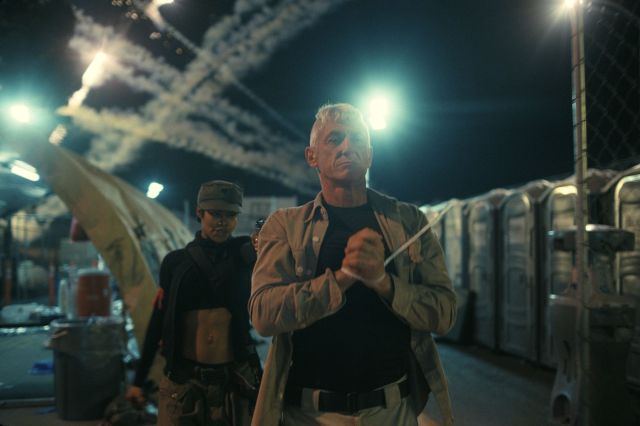
50 Movies You May Have Not Seen That You Should! screening with Derek Zemrak. Photo by Marcus Siu
Article and photos by Marcus Siu

On June 22nd, Variety Magazine published an article reporting that over 50% of exhibition executives surveyed believe the “traditional cinema experience” has less than 20 years remaining as a viable business model and that curated and repertory programming will play a significant role in the survival of movie theaters. Big blockbuster movies will not exist in mainstream theatre but only on IMAX or large format screens.

That certainly is troubling news to theater owners, such as Derek Zemrak who co-owns the Orinda Theater in the Bay Area. However, he has been adapting with the times within his community and continues to curate programming such as his latest “50 Films series”, “Cult Movie Night”,”Matías Bombal’s Hollywood” and even “Free Movie Night”.

“Theaters can’t exist unless you have alternative programming and you are curating your own stuff …that’s what saves us.”, Zemrak explained. “Omar will have 80 people on a Cult Movie on a Saturday night, Matías will have close to 100 on a Tuesday at 1:00 pm. There’s no theater anymore at 1:00 that has 100 people in the theater.”

All of these repertory programs create a unique experience in comparison to home streaming. It’s unique because you can’t readily see them anywhere and it also builds community together along with nostalgia and discovery among its audience.

“There is nothing like sitting in the back and sitting in the front there and listening to people laugh when they should have laughed”, Zemrak explains at the opening of his new “50 Films” series featuring Rob Reiner’s “Flipped”.

“I saw some tears in people’s eyes but you’re not gonna get that sitting at home with whoever it is. It’s just that emotion that rolls through to people and that’s really what it’s all about… I mean it’s moving pictures…and that’s you’re getting moved one way or another…obviously depends on the movie but I hope we’ve curated nice program that everyone will enjoy.”

50 MOVIES YOU MAY NOT HAVE SEEN, THAT YOU SHOULD!

Movie patrons at the Orinda theater often ask Zemrak, who has also been a film critic for over 25 years, for his favorite movie titles and he would always provide an answer.

“That’s a difficult question – here’s a few movies that I think you may enjoy that you may not have seen. Because movies are just like wine”, as Zemrak explains, “I mean, it’s hard to suggest to somebody because you don’t really know what their palette is…but we’ll take a shot.”

“So during the pandemic I wrote this book, then got it published…and here we are today.”

That book is called “Fifty Movies You May Not Have Seen That You Should!” It was written during the 2020 pandemic and published the very next year. The films are mostly after 1991, when Zemrak really started getting into films right after his college days leading up to him becoming a film critic, as well as the founder of the California Independent Film Festival in 1997. He is also a film producer (PGA) and theater owner. To say he has seen lots of movies is a bit of an understatement.

Before compiling his first draft of fifty films for his book, I suggested other noteworthy films for his consideration that might have been under his radar. One of those films was the 2007 film, “Death at a Funeral”, directed by Frank Oz, which should no means should be confused with the forgettable Chris Rock American remake in 2010. I was very lucky to see it at an industry screening with the director in attendance and was lucky to sit right next to Pixar’s director, Pete Doctor, who absolutely loved the film, as well. Needless to say, it made the cut as one of the fifty movies in the book.

The talented but unknown British ensemble cast (at least to an American audience), alongside Peter Dinklange, is insanely brilliant in this little known gem of a movie that did not get much of an audience in its original release. However, it was given a second chance and played last March at the “Free Movie Night” at the Orinda Theater hosted by Tommy O’Dowd. The audience was very grateful for the introduction of the movie and generated renewed interest in the “50 Movies” book, which sold out that same night.

After that gratifying evening, it didn’t take long for Zemrak to realize he should create and curate the film series “Fifty Movies” for the theatre, which actually started in early July with Rob Reiner’s 2010 box-office flop “Flipped”. Zemrak recalls seeing the film at the now defunct Landmark Embarcadero in San Francisco at a press screening and was so impressed with the “coming of age” film that he booked it at the Rheem Theater in Moraga when at the time he owned two theaters.

While it only made $1.7 million at the box office and lost millions of dollars for the studio, it played six weeks straight and became one of the highest grossing theaters in the country for the Rheem Theatre in Moraga, California.

“The Spitfire Grill”, “Mary and Max”, “Finding Your Feet”, “You Can Count on Me”, and “Lovely, Still” round off the movies for the remainder of the year for the series.

Perhaps, it is the movie “Lovely, Still”, a film about lost love and Alzheimer’s that will always have a indelible impression not just with Zemrak, but also with the two Oscar winning actors who starred in the film, Martin Landau and Ellen Burstyn. Ironically, the film never found a distributor.

Zemrak who knew Landau well, gave the script to him while he was still the head of the Actor’s Studio in Los Angeles. He called Ellen Burstyn and said, “you have to read this script…this kid is amazing.” Burstyn read it and she agreed to do it. “Martin always said that this was his best work that he had ever done on the screen and I do agree with that,” Zemrak concluded.

“We played it at the California Independent Film Festival and when I saw the film it was just unbelievable” Zemrak explained “then we found out when the director (Nik Fackler) shows up – he was 18 years old when he wrote the script and 19 years old when he directed Martin Landau and Ellen Burstyn.”

It’s certainly challenging times for independent theaters around the country, but the ones who have the most creativity and diversity of curating repertory programs whether it’s for movies, music, comedy, plays or special events, like the Orinda, will bring and attract more patrons within their community like never before. If that’s not diversity in programming, I don’t know what is!

It was also announced that this year the Orinda Theatre will replace the Castro Theatre to host the San Francisco Silent Film Festival in November.

That’s definitely worth shouting about.

Posted in Entertainment | Tagged , , , , , , , , , , , , , , , , , , , , , , , , , , , , , | Leave a comment

CAN JOURNALISM SURVIVE THE VULTURE CAPITALISTS TO SAVE OUR DEMOCRACY?

The story of one secretive hedge fund that is plundering America’s newspapers and the journalists who are fighting back.(Courtesy Rick Goldsmith/Stripped for Parts: American Journalism on the Brink)  

Article by Marcus Siu

Who will control the future of America’s news ecosystem: Wall Street billionaires concerned only with profit, or those who see journalism as an essential public service, the lifeblood of our democracy?

When award winning investigative reporter, Julie Reynolds, a journalist for the Monterey County Herald (as well as co-founder of the nonprofit news organization Voices of Monterey Bay and associate editor of the independent news outlet, The Imprint) received a call from Bay Area documentary filmmaker Rick Goldsmith who wanted to interview her regarding her investigative findings of Alden Global Capital, she was quite skeptical of the filmmaker whose name she was not familiar with.

“Until I looked him up…there were a few other people talking about making documentaries about Alden and I’m like, yeah yeah. Whatever.”, Reynolds recalled.

As a freelance journalist, she has also reported for the Center for Investigative Reporting, The Nation, NPR, PBS, The NewsGuild and other outlets.

“I sort of didn’t believe it but then I googled him and saw what his work had been. I was like… Oh my God, this is serious.”, Reynolds said. “He’s a serious journalist making documentaries, so I was just honored to be a part of it. I had no idea it was going to take the next four years, but you know so many things changed and had to keep telling the story as the story kept changing.”

A very serious journalist indeed, Goldsmith has two Oscar nominated films to his credit; 1996’s “Tell the Truth and Run: George Seldes and the American Press” and 2009’s “The Most Dangerous Man in America: Daniel Ellsberg and the Pentagon Papers”. He also has many other awards and accolades to his credit, including the prestigious Peabody Award.

Trailer for Stripped for Parts – American Journalism on the Brink

His latest film, “Stripped for Parts – American Journalism on the Brink” is the third of a trilogy about journalism. It’s a story of a secretive hedge fund that is plundering what is left of America’s newspapers, and the journalists who are fighting back, including Reynolds who was on the front line.

Reynolds discovered Alden Global Capital, the parent company of the company she is employed with was accused of acquiring hundreds of newspaper companies across the nation and dismantling them for profit. Her findings would eventually trigger rebellions across the country by journalists working at Alden-owned newspapers. The journalists were also backed by the NewsGuild union, the newsmen and women who would dare to go toe-to-toe with their “vulture capitalist” owners in a battle to save and rebuild local journalism in America.

“What was always interesting about Alden is they never cared what was said until we wrote about them, but ultimately only cared about the bottom line and that is still true today.”, Reynolds said.

After Alden Global Capital became a big investor in Sinclair Broadcasting, they became well aware of the media landscape around them and what roles they could change both socially and politically.

“They actually ordered all of their newspapers to stop endorsing any political candidates long before Bezos interfered with the Washington Post…so they’ve always been kind of standoffish only because they are really only were looking at spreadsheets on the East Coast and their offices”, Reynolds explained. “”It was just another one of their businesses…it could have been a shoe store chain it could have been anything like that. They really don’t care.”

Reynolds, along with Goldsmith were present at the Orinda Theater for a recent screening and Q&A and Goldsmith told the audience that there were three major questions that he wanted to address in his film.

Why would somebody or some outfit try to make money by wrecking journalism rather than practicing it? Since journalism and newspapers are kind of on the ropes of a dying industry… How do you make money at doing that in just a few months later?

However, it was the third question that got Goldsmith hooked soon after he started shooting.

“Here were the journalists who were fighting back. They were putting their jobs on the line. This had happened just after I got into the film, just after that first kind of scene in the film with what’s now called the debt for rebellion; the editorial (in the Denver Post) that blasted the hedge fund owner (vulture capitalist – Randall Smith). These people and not just one but a whole crowd of them were putting their livelihoods on the line and for what? They don’t usually do that as is pointed out in the film.”

“Journalists are covering other people’s stories in the world around them. George Seldes is famous about saying “the most sacred cow of the press is the press itself“. They don’t write about themselves and here they were writing about themselves, and they were standing up…and they were standing up not only for themselves, but really for the rest of us…and for democracy…and that to me was a great story!”.

THE ENEMY OF THE PEOPLE

Goldsmith continued, “Before the last financial crisis and the first decade of this century we started seeing a decline in the number of journalists. I think that led to a less informed public to and then with the rise of social media to not only a misinformed public but a disinformed public. I think that led to the kind of politics and elections that we have seen in the last twelve years now…so one thing did lead to another and now with journalists being called “the enemy of the people” it’s even more dangerous for them.”

“People like Patrick Soon-Shiong (Los Angeles Times) and Jeff Bezos (Washington Post) who own newspapers and are obviously catering to the powers that be right now.”

Goldsmith paused and pulled out an article from the Barre Montpelier Times Argus, (a very small newspaper in Vermont) titled “Yes, We are the Enemy”, which was originally published during the first Trump Administration and was just re-published again last February just when the second Trump Administration just was getting started in February and just months prior, when major newspapers decide not endorse their choices for President.

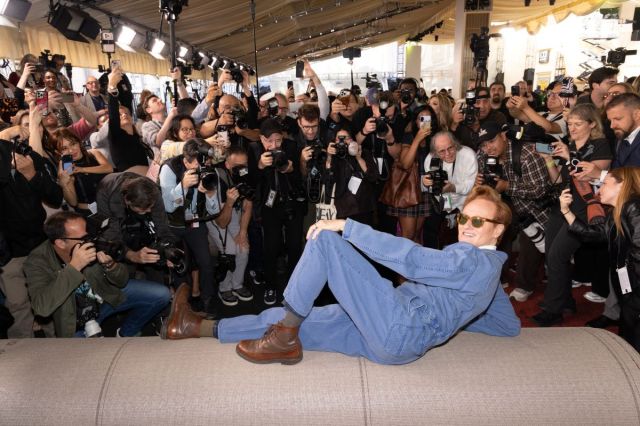
Director Rick Goldsmith at the Orinda Theater. Photo by Marcus Siu
“With Bezos and people like Patrick Soon-Shiong and ABC News kind of caving in to the new (Trump) Administration, this is the kind of journalism that I think we need”, Goldsmith remarked; “this editorial response to the accusation that the newspapers and journalists are “the enemy of the people”.”

“We are the enemy. It’s true. We say that with no hesitation. If you abuse power, we are the enemy. When you use propaganda to mislead the people, you are the enemy. If a public official deliberately hides documents or closes meetings, we are the enemy. We will come after you if you are an oppressor of the underprivileged. We will never allow anyone to silence the voices and opinions of others. If you ignore laws and human rights, you are the enemy. We will call out discrimination, any willingness or eagerness to hate, narrow-mindedness.”…and it goes on, Goldsmith says.

“That to me is the kind of spirit and the kind of attitude that we need desperately more now than ever from the Fourth Estate”, Goldsmith continued. “There are people practicing that and there are a lot of people who partner for the state. We’re not practicing. We’re sitting back and not going after abuse of power.”

“Julie could speak to this. She’s made a career out of it, you go after abuse of power and you know you’re on the right track!”

Julie Reynolds (Courtesy Rick Goldsmith/Stripped for Parts: American Journalism on the Brink)  

Here is the link to the “We are the enemy” article from the Barre Montpelier Times Argus:

https://www.timesargus.com/opinion/editorials/yes-we-are-the-enemy/article_9bbe3a93-2cb3-54d5-a3ab-2fc5add152ed.html

Stripped for Parts – American Journalism on the Brink” is now streaming free on Kanopy.

Also just updated: Stripped for Parts is currently available on PBS for streaming and broadcasts:

  • Streaming – From October 1st to December 31st, the film is available for free at PBS.org or the PBS app (sometimes called “PBS video”) through Roku, Apple TV, Google Play or most smart TVs
  • Broadcast – check here for dates and times, which will be updated periodically. You can also check your local listings.    
  • October 20th at 5pm PT/8pm ET, (and then 3 repeat airings that week) on the PBS World Channel broadcast everywhere, check your local listings to see if your local station carries the World Channel or check the schedule on our website

Posted in Entertainment | Tagged , , , , , , , , , , , , , , , , , | Leave a comment

GROW, ROLL, SMOKE AND SELL YOUR OWN – THE IMMERSIVE VOYAGE OF ROB NILSSON

Article by Marcus Siu

Before home video became a new source of income for movie studios, very few filmmakers had the luxury or power to control the destiny of their films once they were part of the studio system. In contrast, independent filmmakers who produce their films outside the studio system owned the rights to their films even though distribution to outlets would become much more of a challenge, making it extremely difficult to have their films seen by an audience.

In the early 2000’s, during the time DVD’s were becoming mainstream, Director David Lynch created his own website. He sold directly to consumers online, including books, DVD’s, artwork, posters and other “Lynchian” merchandise. He re-mastered his films of “Eraserhead” and his “Shorts” and sold them in limited special edition boxes.  He was one of the pioneers of self-promotion for filmmakers.

Times have changed over the last twenty years, with streaming as the preferred format for consuming movies over physical media discs. Independent filmmakers continue to have to make personal decisions about how to distribute their films through home media or domain websites.  

Some established filmmakers could easily cut a deal with a specialty label, such as Janus or Criterion, which is eventually what David Lynch did with his catalog, or perhaps, Kino-Lorber or Film Movement. However, what if the distributor offers you peanuts?

Rob Nilsson is set on bypassing industry practice.  After many years of dueling with the system he has decided to create his own website, “Rob Nilsson Art Forms”, which integrates his poetry, paintings, poetry and prose. That website launches May 3, 2025 and quotes Nilsson:

“I’m creating a forum for the presentation, study and sales of a lifetimes’ work in poetry, prose, fine art and cinema. It will also be a studio for the production of new Multi-art and film projects working with the many artists and collaborators I have had the good luck to know and admire. Malleator in unum!”

His description of his new website:  “a place for the discovery, study and sales of my poetry, prose, painting, sculpture and cinema” includes 45 dramatic feature films, 450 pieces of art, film criticism and articles, as well as my books and poems.” However, this isn’t your typical website. I believe it could be used as a footprint for future filmmakers in the same boat, much like a “My Space” for filmmakers and artists.

Part of Nilsson’s journey in the last few years, with the able assistance of Zhan Petrov, has featured re-editing and re-mastering fourteen of his films in 4K, including the entire “9 @ Night” Film Cycle.  So even if you have seen some of his films in theaters or film festivals, you haven’t seen the new director approved cuts.  Other re-edited and remastered films include his 1988 Sundance winner, “Heat and Sunlight”, “Love Twice”, Fourth Movement”, “Devised”, Bridge to Border”, and “Maelstrom” with more to follow.

As a witness to some of the recent screenings of the “9 @ Night” films, I find they look better than ever.

With over 45 directorial feature films to his credit, Nilsson, the prolific independent maverick whose shooting locations span three continents, is also the recipient of the prestigious Caméra d’Or at the 1979 Cannes Film Festival (co-directed with John Hanson) for his first feature film, “Northern Lights”, as well as the coveted Grand Jury Prize at the 1988 Sundance Film Festival for “Heat and Sunlight” in which he also played the lead role.  

His intention always been to make his films organically, from within his own community, as an artist driven by independence  and in opposition to the Hollywood monetary studio system.  

His “9 @ Night Film Cycle” seems to be the most ambitious epic project in his fifty-year career: 9 dramatic features, a total running time of fourteen hours, that take place in San Francisco’s Tenderloin District, often seen as a drug-infested place filled with homelessness, violent crime, sex workers, and untreated mental illness.  These films were produced by the Tenderloin Action Group (1992–97) and the Tenderloin yGroup (1998-2009) free acting workshops established for homeless, inner-city residents, local actors, and all comers.  In that time Nilsson, aided by colleagues including Rand Crook, Ethan Sing and Mira Larkin, sometimes recruited established talents such as Robert Viharo and Ron Perlman, who joined in and took roles in the 10 dramatic feature films produced during that time.

He is adamant in saying he never meant to have his movies consumed as “entertainment”.   “All of my films have been made with the inspirations and inventions of workshop members who learn to play characters very like themselves using Direct Action Cinema Workshop techniques:  relaxation, concentration, powerful emotion, back story improvisations and ultimately producing on set improvisational scenes from written outlines, shaped in “mosaic editing” where the finished work is finally discovered.  All I can do is be the occasion for the brilliance of the hundreds of people who have attended my acting workshops in the San Francisco Tenderloin and around the world.  And my real purpose has always been an attempt to explore, in art and in life, “The Way Things Seem to Be”, which is the title of the new four hour biopic on his life and work, directed by Zhan Petrov.  

Rob Nilsson at a studio screening of “Noise”, his first in a series of the “9 @ Night Film Cycle” Photo by Zhan Petrov

Along with Viharo and Perlman, Nilsson has also worked with other professional actors of recognized stature: Stacy Keach, Bruce Dern, Steven Lange, John Marley, Pam Grier, Judy Collins with written scripts, and mainstream goals. But his biggest ambition has been to get the most out of non-professional and professional “players” from his workshops who can display “raw” emotions while presenting the down home hardships of everyday life.

“I’m looking for is the raw encounter”, Nilsson continues, “for me and my workshop it’s all about emotion because I feel if people can really go to the depths:  joy, rage, despair, intimate connection,… they have found a way which leads to almost everything else”.

Often compared to John Cassavetes, the pioneer of American Independent Film, and a great influence on his work, Nilsson remembers his dedication to Cassavetes on his 1984 film, “Signal 7”.

I got to know John and loved what he said, “Hey Rob, Rob! Gena and I saw your film last night.   We never agree on anything and we both loved it!”   Nilsson admits that was one of the great moments of his life. 

I wonder if John Cassavetes would approve of the new website?   Just like he and his wife, Gena Rowlands, who “never agreed on anything” and yet both liked “Signal 7″ film, my bet is both of them would. And John, who often had to self-distribute his ground breaking work might also like Nilsson’s Petrov’s motto:  “Grow your own, Roll your own, Smoke your own, and Sell your own.”

Once again, the website launches on May 3, 2025.

Rob Nilsson displays his alternative version poster of “Northern Lights” at his studio. Photo by Marcus Siu.

Posted in Entertainment, Technology | Tagged , , , , , , , , , , , , , , , , , , , , , , , , , , , , , , , , | Leave a comment

SECRET MALL APARTMENT – ALL IN ALL IT’S NOT JUST ANOTHER HOLE IN THE MALL

Secret Mall Apartment’s Living Space circa 2005
Photo credit; Michael Townsend

Review by Marcus Siu
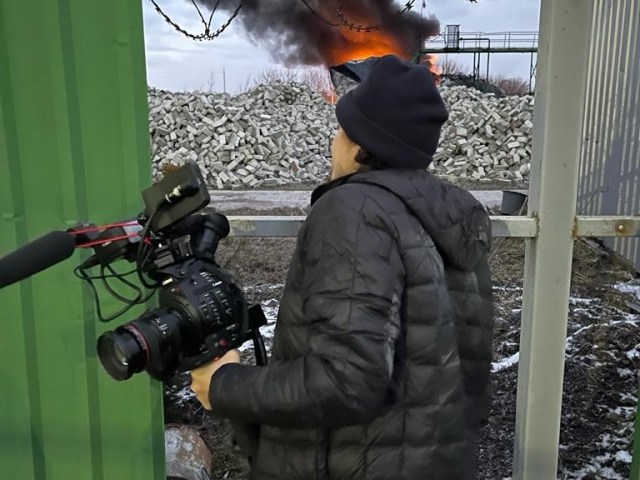
In 2003, Michael Townsend, (arguably the founder of the Tape Art movement and who deserves to be a subject of a separate full feature documentary in itself), and a group of young creative artists discovered a hidden underutilized 750-square-foot space inside the Providence Place Mall in Rhode Island, USA, and turned it into their secret home.

They sneaked in furniture (a large couch, a dresser, a grand credenza, a dining table and chairs, a television, a PlayStation, a waffle iron, and countless personal effects), tapped into the mall’s electricity, and even constructed a brick wall with a locking door, smuggling in over two tons of cinderblock to keep their hideout concealed, bypassing building security with many close calls.

They used the mall’s restrooms for running water and managed to live there for up to three weeks at a time without being detected. The group even planned to add a kitchen and a second bedroom, but their secret was exposed when a visiting artist accidentally revealed their existence…four years later.

This wasn’t intended as a prank. Their idea was a creative protest against real estate developments that had displaced many residents, including Townsend himself.

Secret Mall Apartment subject Michael Townsend
photo credit: Jeremy Workman

Townsend initially met Director Jeremy Workman in Athens, Greece at an art show just a few years ago when they quickly became friends. He was a already an admirer of Workmen’s work even before they met. A few days later, he spilled the beans to Workman about the hidden secret apartment.

Townsend finally found himself a filmmaker who he could absolutely trust to tell his side of the story. Prior to meeting Workman, he turned down 30+ different directors who approched him over the course of 15 years since the news had happened.

“Where I had wondered if they were just goofy pranksters, I quickly learned that they created the secret apartment to make a statement against gentrification.” Workman stated, “They had lost their homes as a result of development, and this was their unique personal way to show developers that they weren’t going anywhere.”

Workman has many accolades to his credit, winning several Film Festival Audience Awards for Best Documentary for his work for “Secret Mall Apartment”, as well as his 2021 film, “Lily Topples the World” which won the Jury Grand Prize for Best Documentary at the 2021 SXSW Film Festival. He also happens to be the son of Chuck Workman, the Academy Award winning director who won Best Live Action film for his 1986 film, “Precious Images”, and the go-to guy for much of the montages and “in memorium” footage seen at the Academy Awards.

“Apparently, the secret apartment was actually some sort of Rhode Island urban legend”, Workman explained. “When the apartment was discovered in 2007, the story had been covered breathlessly in the local news (and beyond).  But since then, it had receded from public memory, lost to urban myth and local lore.  A lot of Providence locals no longer even knew about it.”

Secret Mall Apartment – Providence Place Mall in Rhode Island
Photo credit: Jeremy Workman

This very unusual story surely belongs in the “stranger than fiction” category. Even the most creative script writers in Hollywood wouldn’t be able to conjur up this wacky concept of an idea, no matter what their choice of hallunicgetic drug they consumed.

One of the hilarious and most jaw-dropping moments is when they are sneaking in a large sofa during the during the mall’s closing hours, through the side entry and eventually up a ladder into a tiny alcove. It reminds me of when I see tiny little ants carry bits of food five times larger and heavier their size ascending on route to their final destination.

Leave it to some creative art-school kids who thought outside the box to live inside one inside a shopping mall that symbolizes capital civilization living at its finest. You just can’t help yourself to root for them to break into the shopping mall, not to smash and grab merchandise, but to just live their lives.

The pace of the documentary is like a dramatic live-action thriller intertwined with interviews with the subjects involved using original footage from 2003-2007, as well as present day interviews, giving us more insight of what was going on with the creative minds of those involved. It becomes obvious that besides being anti-gentrification, these considerate and thoughtful individuals care deeply about their community and give generously through their art.

I certainly haven’t looked at shopping malls the same way after seeing this film. You won’t either.

From Executive Producer Jesse Eisenberg.

Posted in Entertainment | Tagged , , , , , , , , , | Leave a comment

THE OSCARS ARE UP FOR GRABS – PREDICTIONS FOR THE 97th ANNUAL ACADEMY AWARDS

Article by Marcus Siu
After Los Angeles had its horrible fires in the Pacific Palisades and Altadena in January, many big-name celebrities in the movie industry had lost their homes: ex-Oscar host Billy Crystal, Oscar winners Jeff Bridges, Anthony Hopkins, and Mel Gibson, as well as household celebrities including Julia Louis-Dreyfus, Haley Joel Osment, Paris Hilton, Miles Teller, Leighton Meester and Adam Brody, and so many more in the industry that would take up this entire article.

When the air was cleared and the nominations were announced, the industry got back on its feet and it looked like the musical drama “Emilia Pérez” was going to be the runaway favorite for Best Picture with its record thirteen nominations; the most ever for an international film. It almost tied the record with “Titanic’s” 14 nominations.

Out of its 13 nominations for “Emilia Pérez”, two of those nominations are for “Best Original Song”. Ironically, the musical “Wicked” with its ten nominations and highest grossing of the Best Picture nominees was not nominated for any songs, since they all are from the original Broadway musical.

It’s quite unusual to have two musicals nominated in the Best Picture race (it was done last in 1968) and it would seem it would have been a great year to have the live performers on stage singing the original songs with this years lineup: Imagine Elton John & Brandi Carlile (“Never Too Late” from “Never Too Late”), Abraham Alexander & Adrian Quesada (“Like a Bird” from “Sing Sing”), H.E.R. (“The Journey” from “Six Triple Eight”) and Selena Gomez and Zoe Saldaña (“Mi Camino” and “El Mal” from “Emilia Pérez”) as performers.

Unfortunately, the producers decided it took too much time out of the show and realized they would rather feature the songwriters from the films rather than the performers at the Oscar ceremony by excluding the performers all together. Fortunately, to appease the musical crowd, Ariana Grande and Cynthia Erivo, the two Oscar-nominated stars of “Wicked,” are slated to take the stage at the Academy Awards, though the Academy has not yet announced which songs from their hit musical they will sing.

With Conan O’Brien hosting tonight’s Oscars, it sure is to be one big fun party.

Here are my Oscar predictions for the 97th Academy Awards; if you can get more than 65% right, you may still win your Oscar pool…it’s a super tough a year for predicting…

BEST PICTURE:

Now that “Emilia Pérez” seems to fall out of favor at the industry award shows thanks mainly to Karla Sofía Gascón’s controversial tweets that were discovered from a few years ago, it’s now become a three-way race between “Anora”, “Conclave”, and “The Brutalist”. It’s anyone’s guess which film will get the big prize.

“Anora”, the rags to riches to rags was the Producers Guild choice, “Conclave” was the BAFTA and SAG ensemble winner, and “The Brutalist” was the Golden Globes Best Picture Drama winner. There is an “Argo-like” feeling that “Conclave”could squeak out a win against its adapted screenplay counterparts, “Anora” and “The Brutalist”, but perhaps it’s too conservative a choice?

I believe if the Academy can choose “Everything, Everywhere, All At Once” as a “Best Picture”, then Sean Baker’s film might be right up their alley.

BEST ACTOR:

Timothée Chalamet as Bob Dylan in “A Complete Unknown” Photo courtesy of Searchlight Pictures

Adrien Brody, who in 2003, won as the youngest ever “Best Actor” recipient at the age of 29 for his role as Wladyslaw Szpilman, a Polish Jewish pianist, classical composer and Holocaust survivor in Roman Polanski’s, “The Pianist”. He is in the running again for his role as László Tóth, a Jewish-Hungarian architect and Holocaust survivor, in the “The Brutalist”. If he wins, he will be the first actor ever to have won in his first two nominations…and the first to win two awards playing Holocaust survivors.

However, “The Brutalist” has been somewhat controversial for its use of artificial intelligence (AI) to alter the accents of Adrien Brody, as well as co-star nominee, Felicity Jones. A.I. was the main reason why the Screen Actors Guild (SAG) went on strike in 2023 for four months in the first place; in part to demand better protection from the potential consequences of AI on their work. This may be the primary reason why Brody lost the SAG awards before sweeping everything else before the controversy was reported.

Dávid Jancsó, the film editor for “The Brutalist”, used AI software Respeecher to correct a sequence where a letter written by Adrien Brody’s character, László Tóth, is read aloud in order for Hungarian locals will be able to spot any difference with the accents, sparking controversy in the industry. “It is controversial in the industry to talk about AI, but it shouldn’t be” he said.

Brody’s director, Brady Corbet, has also suggested this is a non-issue. “The idea that this diminishes their performance in any way is quite silly — because that’s like saying that using a body double or a stunt double in a wide shot diminishes an actor’s performance because they didn’t actually do the stunt. They still had to do all the work, and [the AI] was only ever used with the Hungarian voice-over. Specifically, there is zero dialogue in English where we use the technology, period”.

Regardless of how minimal it was; it’s still cheating in the eyes and minds of SAG, just like what steroids are to professional sports, even if his speaking voice is used as an A.I. voiceover. However, unlike steroids, you can’t read positive by taking a blood test.

My feeling is that even though Brody deserves the award, so does Timothée Chalamet. The young Chalamet is a reckoning in the making and gives Hollywood hope for a better future. He may be exactly what Hollywood desperately needs for the industry to survive. An actor who is willing to take more risks than most most movie studios.

At 29 years, he is the actor of his generation and certainly a risk taker. What actor would even dare to play the legendary iconic Bob Dylan in a movie? Most likely, it seems implausible and your career could end with a Razzy award, but Chalamet did the near-impossible; portraying a musical live icon who is still alive and even getting a validation from him.

One advantage to Chalamet over the others is that the Academy likes to award Oscars to actors who play musical icons. One just has to look Oscar winners Jamie Foxx as Ray Charles, Rami Malek as Freddie Mercury, or even Marion Cotillard as Edith Piaf. However, those icons were never alive to approve their performances. Bob Dylan is alive and well and gave Chalamet his seal of approval.

Another major difference with Timothée Chalamet’s performance to the other past bio-pic Oscar winners is that Chalamet really did sing and play Dylan’s music in the film. With the excessive free time during the pandemic, he spent and researched everything he could about his subject, resulting in him learning forty songs from Dylan’s repertoire, as well as getting to sound “Dylanesque” by playing his own guitar and harmonica. For an actor who knew hardly anything of the icon, that’s dedication.

If Chalamet wins, it would be a shared acknowledgement for his other nominated co-stars of “A Complete Unknown” as both Ed Norton (Pete Seeger) and Monica Barbaro (Joan Baez) sang and played their own instruments, as well.

Kudos to Colman Domingo (“Sing Sing”) as the first black actor to get back to back nominations. I’m sure we’ll see him receiving an Oscar in the near future. Also, don’t count Ralph Fiennes for his role in “Conclave” out of the race. Remember when Sir Anthony Hopkins won for “The Father” a few years ago…that surprised everyone, including himself.

Yes, times are a changing.

BEST ACTRESS:

Demi Moore in “The Substance directed by . Courtesy of MUBI.

There are a few possiblities of history making in the Best Actress category. Karla Sofía Gascón could be the first transgender to win an Oscar, if she wins for “Emilia Pérez”. Cynthia Erivo could be the youngest EGOT winner ever, if she wins for “Wicked”. Demi Moore would be the first actress to win an Oscar for a “body horror” movie for “The Substance”.

The most likely out of all those possibilities is with Demi Moore. She won The Golden Globe (Best Actress in a Musical or Comedy) and SAG for Best Actress. However, she wasn’t running against Golden Globe Winner (Best Actress in a Drama), Fernanda Torres for “I’m Still Here”, who wasn’t nominated in SAG. The other possible winner could be Mikey Madison, who lost to Moore at the Golden Globes. The race is between Moore, Madison and possibly, Torres.

What will probably happen is Demi Moore will be the first actress to ever win an Oscar for a “body horror” movie. Interestingly, I can only think of one other nominated “body horror” actor or actress. That would have been Jeff Goldblum in 1985 for David Cronenberg’s “The Fly”.

Brazil’s “I’m Still Here” starring Fernanda Torres will surprise and win Best International Feature Film upsetting “Emilia Pérez”, especially given that Mexico, the country nearest to the film industry, denounced the film with its political incorrectness being a racist and insensitive portrayal of the mexican culture. Hollywood tries to be politically correct and will make things right. Torres will get her recognition still, but probably won’t be able to beat Demi Moore.

Interestingly, all five nominated “Best Actress” nominees this year also had their respective films nominated for Best Picture. This hasn’t happened since 1977. It’s a reflection in Hollywood how far female driven stories have been gaining in movies over the years.

BEST SUPPORTING ACTOR:

If there is any category that is the “sure thing”, this is it. Kieran Culkin has swept every single “Best Supporting Actor” award out there during the Awards season. There isn’t anyone else even considered in this category, though his competition was quite admirable in each of their roles.

Even if his co-star, Jesse Eisenberg wasn’t nominated alongside Culkin, I still predict the Academy will most likely reward him for Best Original Screenplay to upset Sean Baker’s “Anora”.

BEST SUPPORTING ACTRESS:

Zoe Saldaña stars as Rita in “Emilia Pérez” directed by Jacques Audiard. Courtesy of Netflix.

Zoe Saldaña has swept every “Best Supporting Actress” award out there, as well as the Critics’ Awards. She was the heart of “Emilia Pérez”.

A possible upset is possible, however. I can imagine many voters wanting to give the Oscar to Isabella Rossellini, despite her less than eight minutes of screen time in “Conclave”, but for rewarding her for her illustrious career, as well as her life association with the late David Lynch.

MLS Entertainment’s Oscar Predictions:

Best Picture: “Anora”
Best Actor: Timothée Chalamet, “A Complete Unknown”
Best Actress: Demi Moore, “The Substance”
Best Supporting Actor: Kieran Culkin, “A Real Pain”
Best Supporting Actress: Zoe Saldaña, “Emilia Pérez”
Best Director: Sean Baker, “Anora”
Best Adapted Screenplay: Peter Straughan, “Conclave”
Best Original Screenplay: Jesse Eisenberg, “A Real Pain”
Best Cinematography: “The Brutalist”
Best Costume Design: “Wicked”
Best Film Editing: “Conclave”
Best Makeup and Hairstyling: “The Substance”
Best Music (Original Score): “The Brutalist”
Best Music (Original Song): “El Mal” from “Emilia Pérez”
Best Production Design: “The Brutalist”
Best Sound: “A Complete Unknown” 
Best Visual Effects: “Dune: Part Two” 
Best Animated Feature Film: “The Wild Robot”
Best International Feature Film: “I’m Still Here”
Best Documentary (Feature): “No Other Land”
Best Documentary (Short Subject): “Death by Numbers”
Best Short Film (Animated): “Wander to Wonder”
Best Short Film (Live Action): “I’m Not a Robot”

Posted in Uncategorized | Tagged , , , , , , , , , , , , , , , , , , , , , , , , , , , , , , , , | Leave a comment